
 |
| British right flank (me) facing Mike's French forces. All the figures I think were Basil's |
 |
| British left centre. Dave had the French, and I never did catch the British commander's name. The sides were fairly evenly matched. French had 4 guns to the British 3; and better quality cavalry; British has a few more infantry, which included an elite highlander unit. |
 |
| British extreme left. The French concentrated their cuirassiers and lancers on this wing. The British dragoons, heavy and light, were on the other wing. |
 |
| British form line to face the French columns. Menaced by the heavy dragoons, the left-most French battalion forms square. |
 |
| French square apprehensively awaits the British horse... |
 |
| ...which doesn't come in. The French infantry are reduced to three battalions to attack the highlanders. |
 |
| British heavy dragoons, resisting the urge to trample down the French infantry square... |
 |
| French battery standing in the left rear. They very soon saw off an abortive attack by the British light horse, There was to be no heroics by the light cavalry on this occasion... |
 |
| View westwards from the extreme French right flank. |
 |
| British light infantry holding the woods at the eastern end of the line. |
 |
| Seemingly the Brits have reason to apprehend the approach of French cuirassiers and lancers... |
 |
| Battle is joined! The highlander see off with extreme prejudice the centre column, but the other two close in. |
 |
| Despite their numbers and quality, the highlanders are very brusquely thrown back in their turn. Fortunately, they neither carry off with them any friendly units, and are themselves rallied and brought in hand before exiting the field. |
 |
| One French column follows up the attack, whilst the British dragoons tear into the broken centre column, enduring flanking fire from the French square. |
 |
| Whilst a battle royal is taking place west of the village. to the east, the opposing forces have yet to get to grips. |
 |
| Meanwhile, a rather desultory firefight is developing in the village itself... |
 |
| In this village sector both sides build up for a stern contest for the place. |
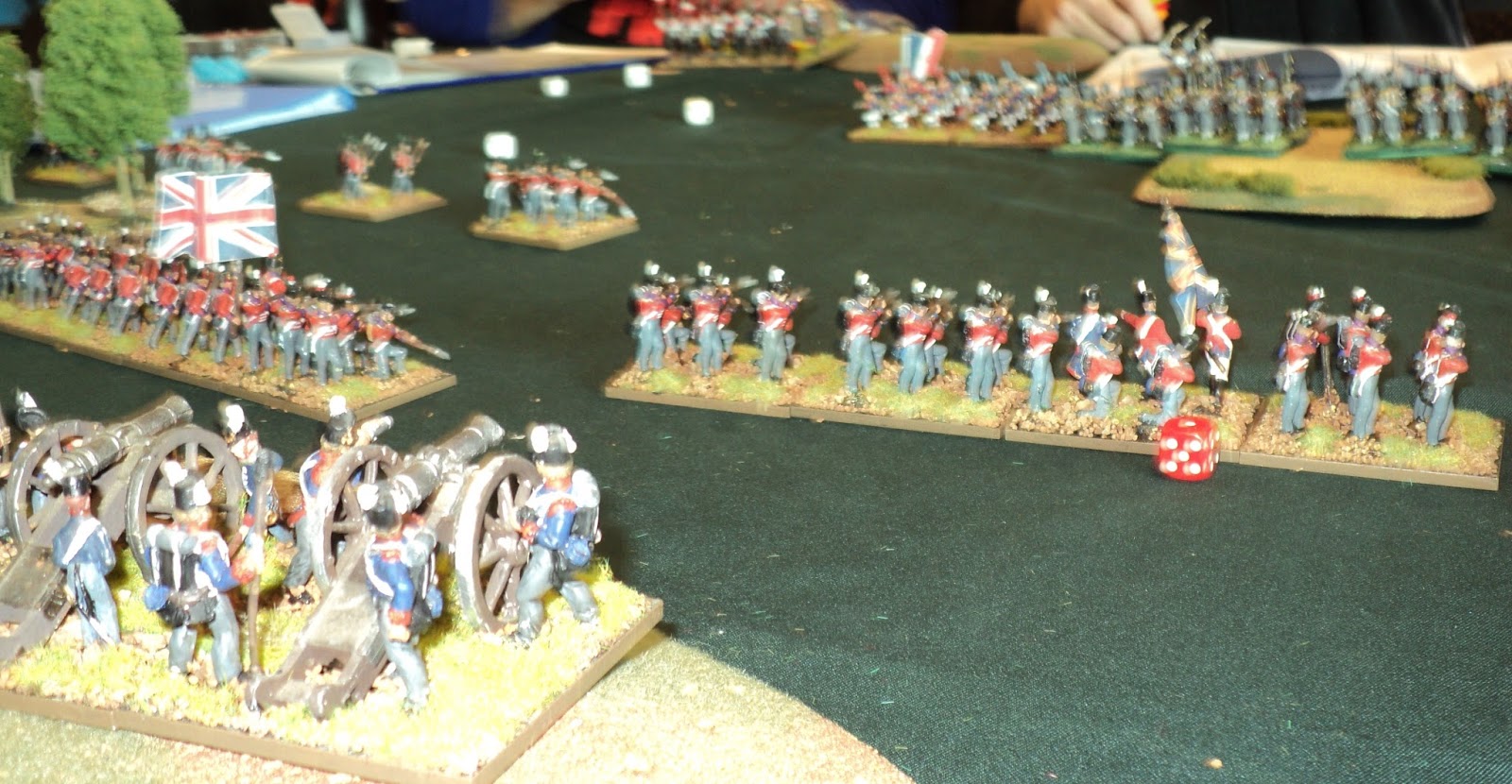 |
| British Royal Horse Artillery in action. |
 |
| The French assault, having come within an ace of breaking through, has been thrown back, but only to their original battle line. Accompanied by General Sir Arthur Whitbread himself, the highlanders return to the fray... |
 |
| Seeing the fields north of the village swarming with enemy' the highlanders wheel to the left to engage them. |
 |
| The Rifles have been all but evicted from the village cornfield. |
 |
| On the left, the British decided no longer to await the tardy Frenchmen, and launch their own attacks, they proved pretty successful: the centre of the French line crumpled at once. |
 |
| Two British battalions facing on on the extreme right flank - and do you think they could make headway against them. Though the latter were supported by artillery, the British were getting slightly better of the fire-fight, but not enough to force back the enemy. Nor were the orders switch in from ENGAGE to ASSAULT getting through... |
 |
| Situation at the close of the day. Neither side could achieve ascendancy, despite early successes on both sides. The action remained deadlocked - a tactical draw. |
This was the last practice battle before the big Waterloo game on the weekend of the 20-21 June. I was supposed to be Napoleon for that event...


